Six that tell a story, with a scientist in it, and leave you knowing something you did not
By Jenny Eich23 November 20264 min read6 books
This site earns from qualifying purchases as an Amazon Associate and Bookshop.org affiliate, at no extra cost to you. Every book here was chosen by hand.How this works
There is a kind of science book that is really a lecture course between covers, with a chapter per topic and a joke per chapter, and it sells well and nobody finishes it. There is another kind that is built the way novels are built: a person, a problem, a search, and the science arriving when the story cannot go on without it. Readers who would never pick up the first kind will finish the second in a weekend.
This guide is the second kind only. The test for each book was simple: does it have a story, with people in it, and does the reader finish knowing how something works. Three are by scientists, two by reporters, one by a chemist who became one of the great writers of the century. Two won the Pulitzer, which has a category for this and uses it well.
They are in a rough order of scale, from the whole history of a disease down to one woman’s cells, one forest’s fungi, one octopus, one man’s life told through the elements. Read in that order or in any other. The last one is the one to keep.
Mukherjee is an oncologist, and he wrote the history of cancer as the biography of an enemy, from an Egyptian papyrus to the drug trials he was running while he wrote. The patients are named, the doctors are flawed and the science arrives when the story needs it, which is how a novelist would do it. It is long and it earns every page. Ideal for readers who want one big book that explains the disease everyone knows someone with, and who are not squeamish about hope.
Thirteen chapters, each about one species, from the Panamanian golden frog to the Sumatran rhino, and each a journey Kolbert took to see what is disappearing and why. She is a reporter rather than a preacher, and the book’s power is in its patience: the reader works out what the pattern means before she says it. Ideal for readers who want to understand the state of the living world without being shouted at, and who like a book you can read one chapter a night.
In 1951 a Baltimore hospital took cells from a dying woman without asking, and they became the first human cells to live forever in a laboratory, used in the polio vaccine and in thousands of experiments since. Skloot tells the science, and she tells the story of Henrietta’s daughter Deborah, who wanted to know what her mother had become, and the two stories need each other. Ideal for readers who want a science book that is also a family story, and for anyone who has wondered who owns a body.
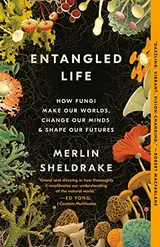
A biologist who has spent his life with fungi, writing about them the way a traveller writes about a country: the network under a forest floor, the yeast in the bread, the fungus that steers an ant up a stalk to die. Sheldrake has a novelist’s eye for the strange detail and the discipline not to overstate it. Ideal for readers who want a book that changes what they see on a walk, and for anyone bored of nature writing about the writer’s feelings.
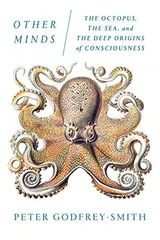
A philosopher of science who dives, writing about octopuses and cuttlefish as the nearest thing to meeting an alien intelligence, because their minds evolved separately from ours for half a billion years. The diving scenes are vivid, the argument about what consciousness is for is serious, and the two never get in each other’s way. Short, and the best introduction to the question of other minds that does not use the word philosophy. Ideal for readers who liked a nature documentary and wanted the book that thinks about it.
Translated by Raymond Rosenthal; Penguin Modern Classics, 2000
Levi was a chemist before and after Auschwitz, and this is his life told in twenty-one chapters, each named for an element: argon for his inert Piedmontese ancestors, zinc for a first love in a laboratory, cerium for the lighter flints he made in the camp to trade for bread. It is memoir, short fiction and chemistry in one book, and nothing else is like it. Raymond Rosenthal’s translation is the standard one. Ideal for readers who came to this list for the novels, and for anyone who thinks science and literature are different departments.
Six books, and only one of them, Mukherjee’s, is long. If you want to keep going, the obvious next shelf is physics, which has fewer stories and more wonder; Carlo Rovelli’s Seven Brief Lessons is eighty pages and a good place to start. The Periodic Table is the one to press on a friend who says they do not read science.
Questions readers ask
Do these books need any science background?
No. Each was written for general readers and explains its terms as it goes. The Emperor of All Maladies is the most technical and it is still a story first; if you can follow a long novel you can follow it.
Which one to read first?
Other Minds if you want short and strange, The Immortal Life of Henrietta Lacks if you want a story that pulls. The Periodic Table is the best book here but it lands harder after one of the others has shown you what the form can do.
Why is a Primo Levi memoir on a science list?
Because it is the best book ever written about what it feels like to be a scientist, and because a Royal Institution vote in 2006 named it the best science book ever written. It is also a book about the Holocaust that never raises its voice.
Murakami opened the door; these are the rooms behind it. Seven novels, from a 1914 classic about a dying friendship to a 2019 bestseller about bodies and money in Osaka, each in a current translation by a named translator, ordered from the most welcoming to the strangest.
English readers have been handed a cut and clumsy Verne for 150 years: the 1872 translation of Twenty Thousand Leagues drops a fifth of the text and turns its science into nonsense. Since the 1990s a handful of scholars have retranslated him properly. These are the five editions to buy, and the reading order.
Marcus Aurelius wrote notes to himself in Greek, never meant for publication, and the English versions range from crisp aphorisms to annotated scholarship. Four current translations compared on the same three passages: one answer for a page a day, another for understanding the Stoics.