Ogawa, Kawakami, Abe, Soseki, Mishima, Tawada and another Kawakami, with the translator named for each
By Jenny Eich23 November 20263 min read7 books
This site earns from qualifying purchases as an Amazon Associate and Bookshop.org affiliate, at no extra cost to you. Every book here was chosen by hand.How this works
Haruki Murakami is the reason most English readers own a Japanese novel, and for many he is the only one, which is a pity, because the shelf behind him is deep and his particular mix of jazz, cats and parallel worlds is not representative of it. Japanese fiction in translation is now one of the richest areas of English-language publishing, with new translators and small presses bringing across writers who were famous at home for decades.
This guide picks seven novels that are not Murakami and not the gentle starting points covered in the earlier Japanese guide on this site. They run from a 1914 classic to a 2019 bestseller, and from quiet realism to an island where memories are confiscated. The translator is named on every entry; for most of these books one good translation exists, and it is the one here.
They are ordered from the most welcoming to the most demanding.
Translated by Allison Markin Powell, Counterpoint, 2017
A woman in her late thirties runs into her old high-school teacher in a bar, and over a year of drinking and eating together something that is not quite a romance grows between them. Hiromi Kawakami writes about food and loneliness with great tact, and Allison Markin Powell’s translation is light on its feet. Ideal for readers who liked Murakami’s quieter books and want the quiet without the surrealism.
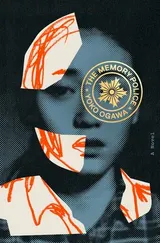
On an island, things disappear, roses, then birds, then whole categories of memory, and the police make sure nobody remembers them; a novelist hides her editor, who cannot forget. Ogawa wrote it in 1994 and Stephen Snyder’s 2019 translation arrived as if on cue. Ideal for readers who liked The Housekeeper and the Professor and want Ogawa’s colder, larger book.
Translated by Sam Bett and David Boyd, Europa Editions, 2020
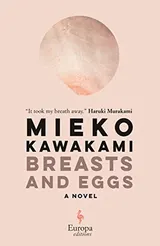
Three women in Osaka and Tokyo, a mother who wants breast implants, a daughter who has stopped speaking, and a narrator deciding whether to have a child alone, in a novel that is frank about bodies, money and class in a way Japanese fiction in English rarely is. Sam Bett and David Boyd’s translation keeps the Osaka voice. Ideal for readers who want the contemporary book, and who thought Japanese novels were all restraint.
Translated by Meredith McKinney, Penguin Classics, 2010
A student befriends an older man he calls Sensei, who carries a secret from his own youth, and the long letter that ends the book is one of the great confessions in any literature. Soseki wrote it in 1914 at the end of the Meiji era and Meredith McKinney’s Penguin translation finally made it read naturally in English. Ideal for readers who want the classic that every later Japanese novelist read.
Translated by E. Dale Saunders, Vintage International, 1991
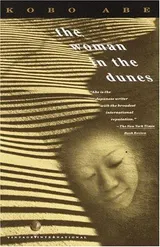
An amateur entomologist misses the last bus from a coastal village and wakes in a house at the bottom of a sand pit, with a woman who shovels sand every night to stop the village being buried, and no ladder. Abe’s novel is a parable that never tells you what it means. Ideal for readers who like Kafka and Camus and want the Japanese book that stands beside them; E. Dale Saunders’s translation is the only one and it is good.
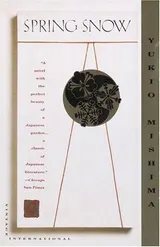
Translated by Michael Gallagher, Vintage International, 1990
Tokyo in 1912, a beautiful and indecisive aristocrat’s son, a girl he refuses until she is promised to a prince, and the first volume of the tetralogy Mishima finished on the morning he died. It is lush, slow and unforgettable, and it stands alone. Ideal for readers ready for the grand style; Michael Gallagher’s translation has lasted.
Translated by Margaret Mitsutani, New Directions, 2018; published in the UK as The Last Children of Tokyo
In a Japan sealed off after a disaster, the old live on and on while children are born frail, and a great-grandfather raises a boy who may be chosen as an emissary to the outside. Tawada, who writes in Japanese and German, makes the catastrophe gentle and the sentences strange. Ideal for readers who want the newest kind of Japanese novel, short and unlike anything else here; Margaret Mitsutani’s translation won the National Book Award.
Start with Hiromi Kawakami if you came here from Murakami, then Ogawa and Mieko Kawakami for the present, Soseki for the root of it all, Abe and Mishima for the two great postwar strangenesses, and Tawada last. The earlier Japanese guide on this site covers the gentler starting points; this one assumes you want to go further.
Most new novels are gone in three years. A few keep finding readers who were not born when they came out. These seven, from a Moscow hotel to a travelling Shakespeare company after the end of the world, are the ones to bet on.
Not every classic is a 900-page doorstop. These eight run from 60 to 190 pages, each can be finished in a weekend, and several are better than the long books that made their authors famous.
Japanese fiction in English is now a crowded shelf, and the famous names are not always the right place to begin. These eight novels, most under 250 pages, are the way in: cafés and libraries, a convenience store, a mathematician with an eighty-minute memory, and finally a snow-country inn.