Philosophy, History & Big Ideas
Which translation of Meditations should you actually read?
Gregory Hays, Robin Hard, Robin Waterfield and Martin Hammond, compared for daily reading and for study
By Jenny Eich23 November 20262 min read4 books
This site earns from qualifying purchases as an Amazon Associate and Bookshop.org affiliate, at no extra cost to you. Every book here was chosen by hand.How this works
Marcus Aurelius did not write a book. He wrote notes to himself, in Greek, in a campaign tent on the Danube, and what survives is twelve short books of maxims, arguments and reminders that were never meant for anyone else. That makes the translator’s choice unusually decisive: render the notes as clipped and private, and Marcus sounds like a man; render them as rounded prose, and he sounds like a sermon.
The free editions online and in bargain bins use George Long’s 1862 translation, which is accurate, Victorian and very hard to read, and is the reason many people give up on the book. Four modern translations are in print and each has a different reader in mind. The comparison here rests on three passages: the opening book of thanks to teachers and family, the entries on death in book four, and the famous instruction to begin each morning expecting to meet ungrateful and arrogant people.
For the wider Stoic reading order, see the starter pack on this site; this guide settles only the question of which Marcus.
Four Meditations at a glance| Translator | Edition | Character | Best for |
|---|
| Gregory Hays | Modern Library, 2003 | Short, blunt, modern; light notes | Daily reading; the first copy to own |
|---|
| Robin Hard, notes by Christopher Gill | Oxford World’s Classics, 2011 | Accurate and plain; strong introduction and notes | Understanding the philosophy |
|---|
| Robin Waterfield | Basic Books, 2021 | Fluent, with notes on nearly every entry | Historical and philosophical study |
|---|
| Martin Hammond | Penguin Classics, 2006 | Dignified, slightly formal; good notes | Readers who want a middle path |
|---|
Each row links to its entry below.
The books
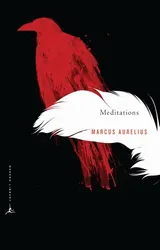
Hays was the first translator to let Marcus sound like a man writing to himself at night: short sentences, no flourishes, the occasional blunt command. The Modern Library edition fits a coat pocket, has a fine introduction and almost no notes, which is either its virtue or its limit. Ideal for daily reading, and for anyone meeting the book for the first time.
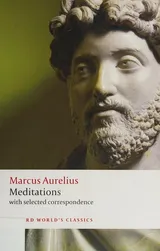
02.02. Meditations, Robin Hard translation, Oxford World’s Classics
Marcus Aurelius (180)
Translated by Robin Hard, with notes by Christopher Gill, Oxford World’s Classics, 2011
Hard’s translation is closer to the Greek than Hays’s and a little plainer in English, and Christopher Gill’s introduction and notes are the best short account of Stoic philosophy attached to any edition of the book. The Oxford paperback is cheap and well made. Ideal for readers who want to understand what Marcus believed, not only what he said.
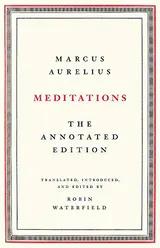
Waterfield, who has translated most of the Greek philosophers, gives a fluent modern version with a note on nearly every entry explaining the people, the doctrine and the Greek behind the English; the notes run longer than the text. It is the edition for the second copy. Ideal for readers who have read Hays and want to know what they were reading.
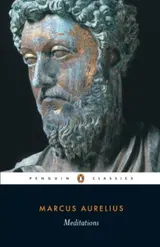
Hammond’s Penguin version sits between Hays and Hard: more formal than the one, more readable than the other, with Diskin Clay’s introduction and useful notes. Many readers who dislike Hays’s clipped style settle here. Ideal for readers who want one copy that serves both reading and reference.
Buy Hays and read a page a morning. When the pages start to raise questions, buy Hard or Waterfield for the answers; Hard if you want the philosophy explained, Waterfield if you want every entry glossed. The old George Long translation that fills the free editions is faithful and unreadable, and the reason so many people think they do not like Marcus Aurelius.