Emily Wilson, Robert Fagles or Caroline Alexander: choosing the right Iliad and Odyssey
The three modern verse translators compared on metre, fidelity and how they sound read aloud, with Lattimore for those who want the Greek line
By Jenny Eich23 November 20263 min read6 books
This site earns from qualifying purchases as an Amazon Associate and Bookshop.org affiliate, at no extra cost to you. Every book here was chosen by hand.How this works
Homer is the most translated poet in English and the argument about how to do it has never been settled, because the choices are real. The Greek is in a long six-beat line with a stock of repeated phrases, rosy-fingered dawn and wine-dark sea among them, and it was composed to be heard. An English translator can keep the line, keep the formulas, keep the speed or keep the plainness, and nobody has kept all four.
The last thirty years produced three translators worth choosing between, and one older one worth keeping. Emily Wilson’s versions of both poems, in strict iambic pentameter, have become the first reading for a new generation; Robert Fagles’s free-verse versions remain the ones people read aloud; Caroline Alexander’s Iliad holds the Greek line in plain English; and Richmond Lattimore’s remains the scholar’s text.
The comparison here rests on three passages read in each: Achilles’ reply to the embassy in Iliad 9, Hector and Andromache at the wall, and Odysseus’s first words to Nausicaa.
Four ways of putting Homer into English
Translator
Poems
Form
Best for
Emily Wilson
Odyssey 2017, Iliad 2023
Iambic pentameter, same line count as the Greek
A first reading in plain, fast modern English
Robert Fagles
Iliad 1990, Odyssey 1996
Loose free verse, long lines
Reading aloud; the most dramatic
Caroline Alexander
Iliad 2015
Line for line, unrhymed, clear
Readers who want the Iliad close to the Greek and still readable
Richmond Lattimore
Iliad 1951, Odyssey 1965
Six-beat line imitating the hexameter
Study, and readers who want the texture of the original
The books
01.
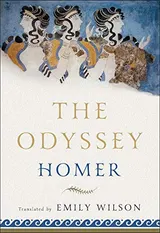
01. The Odyssey, Emily Wilson translation, W. W. Norton
Homer (-700)
Translated by Emily Wilson, W. W. Norton, 2017, paperback 2018
Wilson translates into regular iambic pentameter and keeps to the same number of lines as the Greek, which forces a plain, quick English with no padding, and her Odyssey reads faster than any other. Her introduction and notes on slavery, hospitality and the women of the poem changed how it is taught. Ideal for a first Odyssey, and for readers who were bored by an older version at school.
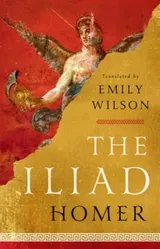
02. The Iliad, Emily Wilson translation, W. W. Norton
Homer (-750)
Translated by Emily Wilson, W. W. Norton, 2023
The Iliad in the same strict pentameter, six years later, and the harder test, because the Iliad’s set speeches and battle catalogues resist speed. Wilson keeps the pace and the clarity and gives the grief its weight. Ideal for readers who liked her Odyssey and want the matching volume; the Norton hardcover is the better object for a poem this long.
03. The Odyssey, Robert Fagles translation, Penguin Classics Deluxe Edition
Homer (-700)
Translated by Robert Fagles, Penguin Classics Deluxe Edition, 1996
Fagles writes a long, loose, muscular line that sacrifices the Greek line count for drama, and his Odyssey is the one actors choose and the one that sounds best in a room. Bernard Knox’s long introduction is a book in itself. Ideal for reading aloud, and for readers who want to be swept rather than guided; the Penguin Deluxe edition is sturdy and well printed.
04. The Iliad, Robert Fagles translation, Penguin Classics Deluxe Edition
Homer (-750)
Translated by Robert Fagles, Penguin Classics Deluxe Edition, 1990
The same approach applied to the Iliad, where it works even better: the battle scenes have an energy no other English version matches and the speeches ring. It is freer with the Greek than Wilson or Alexander. Ideal for readers who want the Iliad as an experience before they want it as a text.
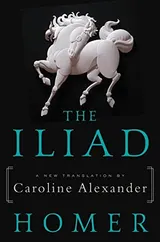
05. The Iliad, Caroline Alexander translation, Ecco
Homer (-750)
Translated by Caroline Alexander, Ecco, 2015
Alexander, a classicist who wrote a book on the poem before she translated it, keeps line for line with the Greek in an unrhymed, lightly rhythmical English that never strains, and her Iliad is the most faithful of the readable versions. It has fewer notes than the others. Ideal for readers who want to stay close to what Homer said without the archaism of Lattimore.
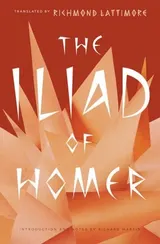
06. The Iliad, Richmond Lattimore translation, University of Chicago Press
Homer (-750)
Translated by Richmond Lattimore, University of Chicago Press, 1951, edition of 2011 with an introduction by Richard Martin
Lattimore’s 1951 Iliad, in a long six-beat line built to echo the hexameter, was the standard for half a century and is still what most classics departments assign, because it keeps Homer’s word order and formulas. It reads as deliberately foreign. Ideal for study, and for readers who want to feel the distance between the Greek and us; the 2011 Chicago edition adds Richard Martin’s introduction.
For a first reading, Wilson for both poems. For the sound, Fagles. For the Iliad alone, close to the Greek and still a pleasure, Alexander. Lattimore when you want to work. The one thing every version shares is that it is better heard than skimmed: read a book of it aloud, whichever you choose, and the argument about translators becomes much easier to settle.
Marcus Aurelius wrote notes to himself in Greek, never meant for publication, and the English versions range from crisp aphorisms to annotated scholarship. Four current translations compared on the same three passages: one answer for a page a day, another for understanding the Stoics.
García Márquez made magical realism the brand, and the brand hides a continent. These seven books, from a 1955 novella that Márquez learned by heart to a 2016 story collection that scared Argentina, show what else Latin American fiction has been, each in a strong English translation and one with a choice of two.
English readers have been handed a cut and clumsy Verne for 150 years: the 1872 translation of Twenty Thousand Leagues drops a fifth of the text and turns its science into nonsense. Since the 1990s a handful of scholars have retranslated him properly. These are the five editions to buy, and the reading order.