Seven Latin American novels beyond One Hundred Years of Solitude
From Rulfo’s village of the dead to Enriquez’s Buenos Aires, with the translation to buy where more than one exists
By Jenny Eich23 November 20263 min read7 books
This site earns from qualifying purchases as an Amazon Associate and Bookshop.org affiliate, at no extra cost to you. Every book here was chosen by hand.How this works
For English readers, Latin American fiction begins and often ends with One Hundred Years of Solitude, and the label that came with it, magical realism, has stuck to a whole continent of writers who have little in common with it. Borges wrote metaphysical puzzles; Rulfo, whom García Márquez revered, wrote a village of ghosts in the plainest prose imaginable; Bolaño and Enriquez write about dictatorship’s afterlife with no magic at all.
This guide picks seven books that show the range, from Mexico and Argentina to Brazil, Peru and Chile, in English translations that are current and well regarded. One title, Pedro Páramo, exists in two good translations and the entry says how they differ. The rest have one standard version, named.
The order is a reading path: the short foundational book first, the long one near the end, and the newest voice last.
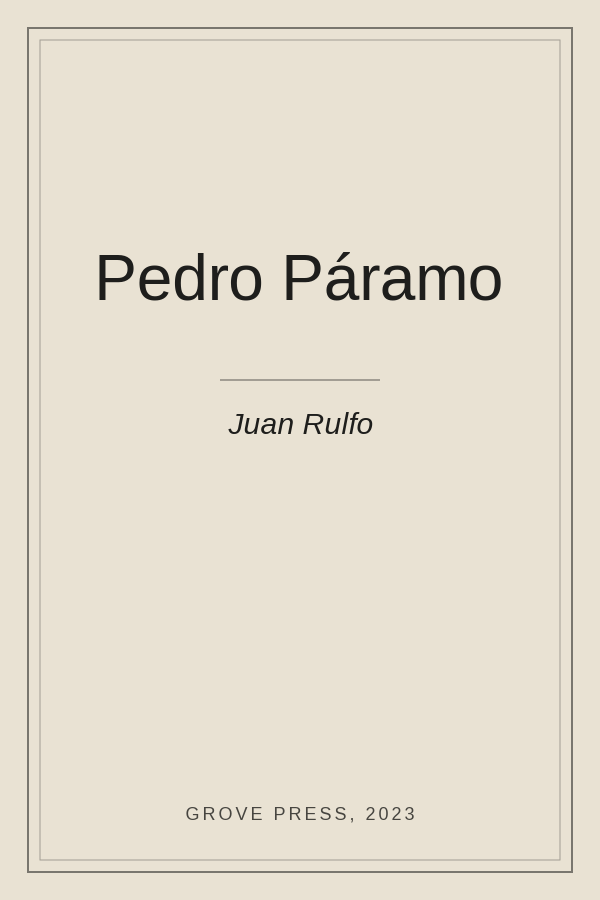
Translated by Douglas J. Weatherford, Grove Press, 2023
A man goes to the village of Comala to find the father he never knew and discovers that everyone he meets is dead, in a novella of 120 pages that García Márquez said he could recite from memory and that stands behind his whole career. Douglas Weatherford’s 2023 translation is the first to get the voices right; Margaret Sayers Peden’s 1994 version is still in print and still good. Ideal for the first book on this list, and the shortest.
Also considerMargaret Sayers Peden’s translation (Grove, 1994), smoother and slightly more explanatory, if the new one is not to hand.
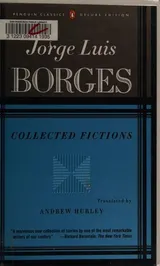
Every story Borges wrote, in one volume: the library that contains all books, the map the size of the empire, the man who remembers everything, each in a few pages of prose that reads like a proof. Andrew Hurley’s translation is the complete one and the standard. Ideal for readers who want to understand where half of modern fiction came from, five pages at a time.
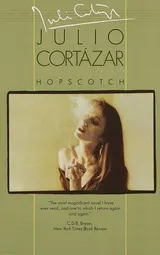
An Argentine in Paris, a lover called La Maga, and a novel you can read in order or by hopping between chapters as the author’s table suggests, which sounds like a gimmick and is not. Gregory Rabassa’s 1966 translation was his first and won the first National Book Award for translation. Ideal for readers who want the experimental sixties book that still works, and for anyone who loves Paris.
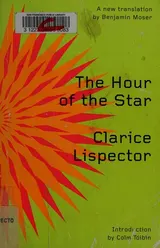
Translated by Benjamin Moser, New Directions, 2011
A typist from the poor north-east of Brazil, barely visible in Rio, and a male narrator who cannot decide how to tell her story without betraying her, in eighty pages Lispector wrote the year she died. Benjamin Moser’s translation and the New Directions edition restored her to English readers. Ideal for readers who want the Brazilian strand, and who like a book that argues with itself.
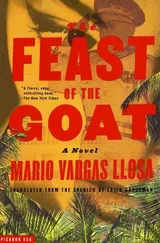
The last day of the dictator Trujillo in 1961 and the return, thirty-five years later, of a woman who was given to him as a girl, told in three interleaved strands that close like a trap. It is Vargas Llosa’s most controlled novel and Edith Grossman’s translation is exact. Ideal for readers who want the political novel the continent kept having to write.
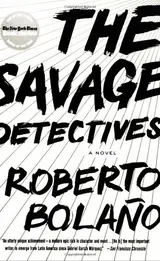
Two young poets vanish from Mexico City in 1976 and the middle four hundred pages are the testimony of everyone who met them in the twenty years after, across three continents. It is baggy, funny and the book that made Bolaño a cult in English. Natasha Wimmer translated it and 2666 both. Ideal for readers ready for a long one and for anyone who has ever been young and insufferable about literature.
Twelve stories set in a Buenos Aires where the dictatorship’s dead, the slums and the saints are all still present, told as horror because, Enriquez says, that is what they are. Megan McDowell’s translation keeps the dread exact. Ideal for readers who want the contemporary voice, and who do not need to sleep tonight.
Read Rulfo first, because it is short and everything else assumes it. Borges and Cortázar together for Argentina in its two moods, Lispector for Brazil, Vargas Llosa for the politics, Bolaño when you have three weeks, and Enriquez to see where it has gone. García Márquez himself can wait; you have almost certainly already read him.
Marcus Aurelius wrote notes to himself in Greek, never meant for publication, and the English versions range from crisp aphorisms to annotated scholarship. Four current translations compared on the same three passages: one answer for a page a day, another for understanding the Stoics.
English readers have been handed a cut and clumsy Verne for 150 years: the 1872 translation of Twenty Thousand Leagues drops a fifth of the text and turns its science into nonsense. Since the 1990s a handful of scholars have retranslated him properly. These are the five editions to buy, and the reading order.
Murakami opened the door; these are the rooms behind it. Seven novels, from a 1914 classic about a dying friendship to a 2019 bestseller about bodies and money in Osaka, each in a current translation by a named translator, ordered from the most welcoming to the strangest.