Mark Twain beyond Tom Sawyer: six books in reading order
The two river novels everyone knows, then the memoir, the satire, the dark late book and the travel book that made him famous
By Jenny Eich23 November 20264 min read6 books
This site earns from qualifying purchases as an Amazon Associate and Bookshop.org affiliate, at no extra cost to you. Every book here was chosen by hand.How this works
Mark Twain is the American writer most people have read and fewest have read past. Tom Sawyer at school, perhaps Huckleberry Finn after it, and then the white suit and the quotations, half of which he never said, stand in for the rest of a long shelf.
The rest of the shelf is where he is most interesting. The travel books made him famous before the novels did. The river memoir is the finest thing he wrote about the place he came from. The late books, after the money went and the daughter died, are angrier and stranger than his reputation allows, and one of them is a detective story about slavery with fingerprints for evidence.
This guide takes six, in an order that follows the career rather than the dates. It starts with the two river novels because they are the ones to have read before the others make sense, and it ends with the earliest book, because by then the voice will be familiar enough to hear how new it was. The Penguin Classics editions are named throughout: they print the texts as written, with introductions that do the explaining a modern reader needs.
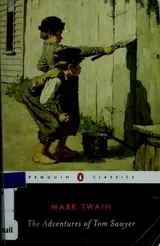
The boyhood book, and better than its reputation as one. The fence, the cave, the funeral the boys attend for themselves: Twain wrote it as nostalgia for a river town that was already gone, and the nostalgia is what gives the comedy its warmth. Read it first, quickly, for the town and the people Huck will leave behind. Ideal for readers who last met it at school, and for anyone reading Twain with a child.
Penguin Classics, 2003, unaltered text with introduction and notes
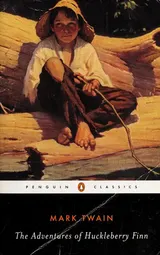
A boy and an escaped slave on a raft, drifting south through a country that is funny on the shore and murderous in the towns. Twain let Huck tell it in his own voice, and that voice, plain, exact, never wiser than the boy, is where American prose stopped imitating England. The chapter where Huck decides he will go to hell rather than betray Jim is the moral centre of the national literature. The last fifty pages, when Tom turns up and turns it into a game, are the famous weakness; read through them. Buy an edition that prints the text as written, with an introduction that explains why. Ideal for every reader of American fiction, and for anyone who has only heard about it.
Also considerThe Library of America Mississippi Writings, which has Tom Sawyer, Life on the Mississippi, Huckleberry Finn and Pudd’nhead Wilson in one volume, if you intend to read four of the six.
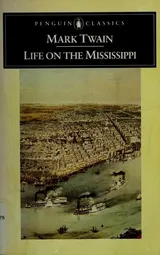
The first half is one of the great memoirs in English: Twain at twenty learning to pilot a steamboat, a river that changes every night, and a teacher who makes him memorise twelve hundred miles of it. The second half is the middle-aged author going back in 1882 to find the river tamed and the towns grown dull, and it sags, with chapters of local history padded in. Read the first twenty chapters with full attention and skim the rest. Ideal for readers who want the river itself, and for anyone who liked the raft more than the plot.
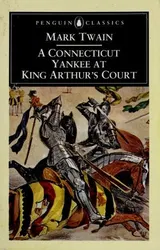
A Hartford factory foreman wakes in Camelot, predicts an eclipse, and sets out to drag the sixth century into the nineteenth with soap, newspapers and gunpowder. It starts as a romp at the expense of Malory and Walter Scott and ends in a massacre by electric fence and Gatling gun, and Twain seems to have surprised himself. It is the funniest of his novels for two hundred pages and then the most disturbing. Ideal for readers who like satire with teeth, and for anyone who assumed Twain was gentle.
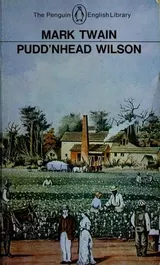
A slave swaps her baby for the master’s in the cradle, and the two boys grow up in each other’s lives, in a Missouri river town where a young lawyer’s odd hobby of collecting fingerprints will one day settle the matter. It is short, grim and formally strange, a detective story about race written in 1894, with a cynical maxim from Wilson’s calendar at the head of every chapter. Ideal for readers who want late Twain at his sharpest, and for anyone who thinks Huck Finn was his last word on slavery.
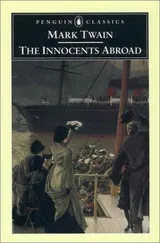
In 1867 Twain joined the first American pleasure cruise to Europe and the Holy Land and wrote up the passengers, the guides, the Old Masters and the sacred sites with a tourist’s irreverence that had never been printed before. It was the best-selling book of his lifetime, and it is still the one that explains the voice: the Western reporter who refuses to be impressed on cue. Long, and meant for dipping. Ideal for readers who travel, and for anyone who wants Twain before the novels, when he was simply the funniest man in the country.
Also considerRoughing It (Penguin Classics), the companion book about his years in Nevada and California, which is looser and often funnier.
Six books is the shape of the career: the river twice, the voice made, the anger arriving. If you want more, the Autobiography of Mark Twain (University of California Press), published a century after his death as he instructed, is three volumes of him talking, and the first is the one to try. The short stories are patchier than their fame; the one to read is "The Man That Corrupted Hadleyburg".
Questions readers ask
Which Twain book should an adult start with?
Huckleberry Finn, if you have never read it as an adult, and Life on the Mississippi if you have. Tom Sawyer is here first because it is short and sets up the people, not because it is the best.
Does Huckleberry Finn need a special edition?
It needs an edition that prints what Twain wrote, including the slur that appears more than two hundred times, with an introduction that puts it in its place. Editions that substitute another word exist and are not recommended. The Penguin Classics and the Library of America volume both keep the text.
Are the books suitable for children?
Tom Sawyer, yes, from about ten. Huckleberry Finn is a book for teenagers and adults, and reads differently at each age. The others are written for adults and assume a reader who knows some history.
Marcus Aurelius wrote notes to himself in Greek, never meant for publication, and the English versions range from crisp aphorisms to annotated scholarship. Four current translations compared on the same three passages: one answer for a page a day, another for understanding the Stoics.
García Márquez made magical realism the brand, and the brand hides a continent. These seven books, from a 1955 novella that Márquez learned by heart to a 2016 story collection that scared Argentina, show what else Latin American fiction has been, each in a strong English translation and one with a choice of two.
English readers have been handed a cut and clumsy Verne for 150 years: the 1872 translation of Twenty Thousand Leagues drops a fifth of the text and turns its science into nonsense. Since the 1990s a handful of scholars have retranslated him properly. These are the five editions to buy, and the reading order.