Classic Literature
Which translation of Crime and Punishment should you buy?
Garnett, Pevear and Volokhonsky, Oliver Ready and Michael Katz, read against each other on the same two passages
By Jenny Eich23 November 20262 min read4 books
This site earns from qualifying purchases as an Amazon Associate and Bookshop.org affiliate, at no extra cost to you. Every book here was chosen by hand.How this works
Dostoevsky wrote Crime and Punishment in a hurry, in debt, for a magazine, and the prose shows it: sentences that double back, words repeated three times in a paragraph, a narrator who catches the fever of the man he is describing. For a century English translators treated that as a fault to be corrected. The modern ones treat it as the point. Which side a translation takes decides what kind of novel you read.
Four versions are in print, well edited and easy to buy. The comparison here rests on two passages: Raskolnikov’s delirium after the murder, where the sentences lose their footing, and the Haymarket street scenes, where the city’s noise comes through in slang and shouted fragments. One translation keeps both alive, one keeps the texture at a cost in ease, one keeps the ease at a cost in texture, and one is a century old and cheap.
Four translations at a glance| Translator | Edition | Register | Best for |
|---|
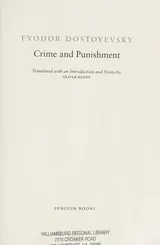
| Oliver Ready | Penguin Classics, 2014 | Colloquial, urgent, rich notes | A first reading |
|---|
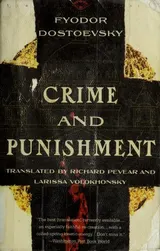
| Richard Pevear and Larissa Volokhonsky | Vintage Classics, 1993 | Close to the Russian, deliberately rough | Rereading and study |
|---|
| Michael R. Katz | Liveright, 2017 | Clear, modern American, well annotated | Readers who found the others heavy |
|---|
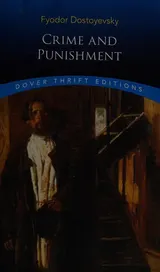
| Constance Garnett | Dover and other budget editions, 1914 | Smooth Edwardian English, some flattening | The cheapest sound copy |
|---|
Each row links to its entry below.
The books
Ready, a Russianist at Oxford, set out to make Raskolnikov’s Petersburg sound as feverish and talkative in English as it does in Russian, and his sentences run and stumble the way the original does. The notes explain the money, the streets and the slang without crowding the page. Ideal for a first reading, and for anyone who abandoned the novel in an older translation.
The husband-and-wife team’s version keeps Dostoevsky’s repetitions, odd word order and abrupt shifts of tone, which earlier translators smoothed away, and the result is both closer to the Russian and harder going. It became the standard academic text in the 1990s. Ideal for a second reading or for study, when you want to see the seams rather than be carried past them.
Katz, who has translated most of Dostoevsky, writes a plain modern American English that moves quickly and never calls attention to itself, with a good introduction and notes. It lacks the edge of Ready and the texture of Pevear and Volokhonsky, and some readers prefer it for exactly that reason. Ideal for readers who found the other versions heavy and want the story clear.
04.04. Crime and Punishment, Constance Garnett translation, Dover Thrift Editions
Fyodor Dostoevsky (1866)
Translated by Constance Garnett, 1914, Dover Thrift Editions, 2001
Garnett translated most of the Russian classics into English single-handed between 1900 and 1930, and her Dostoevsky is fluent, Edwardian and a little too polite, with the novel’s roughness sanded down. It is out of copyright, so it is in every budget edition and free online. Ideal for readers on a tight budget, provided they know a sharper version exists.
Buy Ready. If you already know the novel, add Pevear and Volokhonsky for the second time through and notice what the first reading missed. Katz is the fallback for readers who want the plot without the pressure, and Garnett is for the day the budget is three pounds.