Five novels that put you inside the Empire, in the order that makes each one land harder
By Jenny Eich23 November 20263 min read5 books
This site earns from qualifying purchases as an Amazon Associate and Bookshop.org affiliate, at no extra cost to you. Every book here was chosen by hand.How this works
Rome has been written about by novelists since the eighteenth century, and most of the result is costume: senators in sheets, a poisoning every fifty pages, a gladiator with a heart. The good Roman novels do something else. They treat the place as a working society, with jobs and tax and letters that take weeks to arrive, and they find the drama in how people lived inside it.
This guide picks five, written between 1934 and 2006, by an English poet, a French academician, an American professor, an English political journalist and an American provocateur. They do not share a style. What they share is a refusal to explain Rome from outside. Each puts the reader inside one head, an emperor’s or a secretary’s, and lets the Empire assemble itself around that point of view.
The order matters. Graves gives you the family everyone else assumes you know. Yourcenar gives you the Empire at its calmest and most thoughtful. Williams takes you back to its founding and shows the cost. Harris takes you back further, to the Republic falling apart. Vidal comes last and watches it all turn into something else.
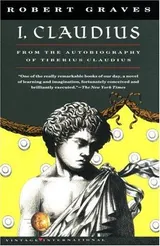
The one that invented the modern Roman novel. Graves lets the stammering, limping Claudius tell the story of his family, Augustus to Caligula, as a memoir written by the only one too harmless to kill. It is gossip raised to history, and Livia, poisoning her way through three generations, is one of the great villains in English fiction. Read it first: every later Roman novel assumes you know it. Ideal for readers who want the Julio-Claudians as a family saga, and for anyone who saw the television series and never read the book.
Also considerClaudius the God (Vintage), the sequel, which covers his own reign and is nearly as good.
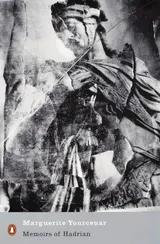
Translated by Grace Frick with the author; Penguin Modern Classics, 2000, with Reflections on the Composition
An ageing emperor writes a long letter to the boy who will succeed him, and the boy is Marcus Aurelius. Yourcenar spent twenty years on this and threw away two versions; what survived is the most intelligent historical novel of the century, calm, exact and heartbroken about Antinous. Grace Frick’s translation was made with the author at her elbow, and the Penguin edition appends Yourcenar’s notes on how she wrote it, which are worth the price alone. Ideal for readers who want a novel of ideas rather than events, and who will go on to the Meditations afterwards.
NYRB Classics, 2014, introduction by Daniel Mendelsohn
Williams is now known for Stoner, but this is the book that won him the National Book Award, and it is the better novel. Told entirely in letters, journals and dispatches, it follows Octavius from the day Caesar is murdered to the deathbed of the first emperor, and it never once lets the reader inside his head, which turns out to be the point. The last section, Julia’s journal from exile, is as sad as anything Williams wrote. Ideal for readers who like a novel built from documents, and for anyone who thought Stoner was his only one.
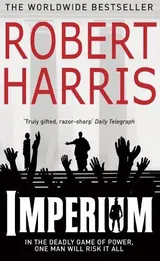
Cicero’s rise, from provincial advocate to consul, narrated by Tiro, the slave who was his secretary and really did invent shorthand. Harris treats the late Republic as what it was, a political thriller with the stakes of a civil war, and the great set piece, the prosecution of Verres, reads like a courtroom drama because it was one. First of three; the trilogy gets darker and better. Ideal for readers who want Rome at the speed of a thriller, and for anyone who follows politics and recognises every move.
Also considerLustrum and Dictator (Arrow), the second and third parts, which take Cicero through Catiline and Caesar to the end.
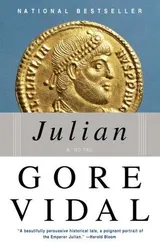
The last pagan emperor, who tried to undo Constantine’s Christianity and died in Persia at thirty-one, tells his story in a memoir that two old philosophers annotate after his death, correcting him and each other. Vidal is funny, erudite and unfair to Christians in a way the fourth century would have recognised, and the book is an argument about what Rome lost. Read it last: it needs the three centuries before it. Ideal for readers who like a novel with a point of view, and for anyone curious how the Empire turned Christian.
Read in this order, the five books make a single arc, from the first emperor’s family to the last one who tried to turn back the clock, and from the most famous Roman novel to the most argumentative. If you want a sixth, go sideways to Mary Renault, whose Greece is the equal of any of these; the Alexander trilogy will get its own guide.
Questions readers ask
Do I need to know Roman history to enjoy these?
No. Each novel explains what it needs as it goes, and the order here means each book supplies the background the next assumes. A single page of emperors with dates, printed in most editions, is all the apparatus you want.
Which one to read if you only read one?
Memoirs of Hadrian. It is the shortest of the five and the one most likely to stay with you. I, Claudius is the more entertaining evening.
What about Pompeii and the other Robert Harris Roman books?
Pompeii is a good standalone thriller about the eruption and does not depend on the Cicero books. Start there if you want a weekend rather than a trilogy; Imperium is the one that rewards continuing.
Marcus Aurelius wrote notes to himself in Greek, never meant for publication, and the English versions range from crisp aphorisms to annotated scholarship. Four current translations compared on the same three passages: one answer for a page a day, another for understanding the Stoics.
Murakami opened the door; these are the rooms behind it. Seven novels, from a 1914 classic about a dying friendship to a 2019 bestseller about bodies and money in Osaka, each in a current translation by a named translator, ordered from the most welcoming to the strangest.
Haussmann’s boulevards, the first department stores, the barricades of 1832 and the dancers at the Opéra: the Paris of the 19th century is the most written-about city in fiction. Four French classics in strong modern translations and two recent novels, ordered by decade.