Seven Victorian novels beyond Dickens and the Brontës
Gaskell, Trollope, Gissing, Collins, Eliot, Thackeray and Hardy, in the editions with the notes a modern reader needs
By Jenny Eich23 November 20263 min read7 books
This site earns from qualifying purchases as an Amazon Associate and Bookshop.org affiliate, at no extra cost to you. Every book here was chosen by hand.How this works
Ask for a Victorian novel and the answer is Dickens, or one of the Brontës, and both are good answers. But the sixty years of Victoria’s reign produced a whole shelf of novelists who sold as well, argued harder and, in a few cases, wrote better, and most readers never reach them because the famous names fill the syllabus.
This guide picks seven. It leans towards novels that are still alive as reading rather than as monuments: a sensation thriller, a strike, a swindle, a marriage gone wrong in a provincial town. The editions named are the Penguin Classics, because for Victorian fiction the notes matter: a reader today needs to know what an entail is, what a mill hand earned and why a railway share could ruin a duke.
They are ordered as a reading path, from the fastest to the one that assumes you know the rest.
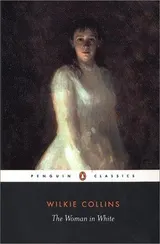
A drawing master meets a woman in white on a moonlit road out of London, and the book that follows invented the sensation novel: multiple narrators, a locked-away wife, and in Count Fosco the most charming villain of the century. It still reads like a thriller. Ideal for readers who want to start with momentum; Matthew Sweet’s Penguin edition has the right notes and none too many.
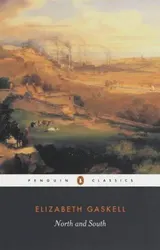
A clergyman’s daughter from the soft south moves to a cotton town in the north and clashes with a mill owner over a strike, in a novel that takes the workers seriously and the romance seriously at once. Gaskell knew Manchester from the inside. Ideal for readers who liked Austen’s arguments and want them moved into an industrial city; the Penguin edition’s notes on the mills are essential.
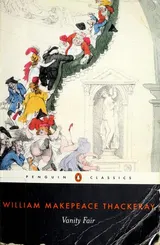
Becky Sharp climbs through Regency society on wit and nerve, and Thackeray watches her with an irony that spares nobody, least of all the reader. It is long, digressive and funnier than anything Dickens wrote. Ideal for readers who want a narrator with a voice, and for anyone who enjoyed the Trollope; John Carey’s Penguin edition keeps the original illustrations.
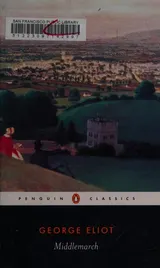
A provincial town in the years before the Reform Act, a young woman who marries the wrong scholar and a young doctor who marries the wrong beauty, and the novel many English readers put first of all. It asks for patience in the first hundred pages and repays it for the next eight hundred. Ideal for readers ready for the long one; Rosemary Ashton’s Penguin edition is the standard text.
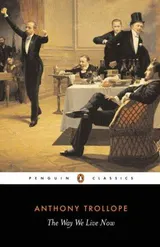
A financier of uncertain origin arrives in London, floats a railway that may not exist, and is courted by every lord and newspaper in town, in Trollope’s angriest and most modern novel. Written in 1875, it reads like last year’s news. Ideal for readers who want the Victorian novel of money and fraud; Frank Kermode’s Penguin edition is the one to have.
Penguin Classics, edited by Rosemarie Morgan, 2003
Bathsheba Everdene inherits a farm and three men want her, in the novel that made Hardy’s name and the gentlest of his major books. The landscape is a character and the ending, for once in Hardy, is kind. Ideal for readers who want the countryside rather than the city, and a way into Hardy before the tragedies.
Penguin Classics, edited by Bernard Bergonzi, 1968
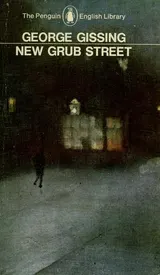
Two writers in 1880s London, one who writes what sells and one who cannot, and the most honest novel ever written about the literary trade. Gissing lived it, and the poverty on the page is not picturesque. Ideal for readers who write, or who want to know what the Victorian book world cost the people inside it; read it last, when the others have shown you the market it describes.
A reading order: Collins for pace, Gaskell for argument, Thackeray for wit, then Eliot when you have a month, Trollope for the money, Hardy for the land, and Gissing to see what it cost to write any of them. The Penguin Classics editions are named because their notes are the best; the Oxford World’s Classics versions are a sound alternative for every title here.
Some histories are read for information; these seven are read the way novels are, for character, pace and the dread of knowing how it ends. From the first month of 1914 to a Soviet kitchen table after the collapse, each is long, sourced to the footnote, and named in the edition whose binding will last.
Haussmann’s boulevards, the first department stores, the barricades of 1832 and the dancers at the Opéra: the Paris of the 19th century is the most written-about city in fiction. Four French classics in strong modern translations and two recent novels, ordered by decade.
Jane Eyre is the one everyone has read. Charlotte Brontë wrote three other novels, one of them arguably better, and a life stranger than any of them. This is the reading order, with the Penguin editions that carry the best notes, and the biography to read when the novels run out.