Seven European small-press masterpieces under 220 pages
Fitzcarraldo, Peirene, Pushkin, New Directions and CB editions, for readers who like a slim book beautifully made
By Jenny Eich23 November 20263 min read7 books
This site earns from qualifying purchases as an Amazon Associate and Bookshop.org affiliate, at no extra cost to you. Every book here was chosen by hand.How this works
Something changed in translated fiction in the 2010s. The books that mattered started coming from small presses with short lists and strong opinions about design, Fitzcarraldo in London with its plain blue and white covers, Peirene with its numbered novellas, Pushkin with its revival of Zweig, New Directions in New York, CB editions run from a flat in Hampstead, and readers began buying the imprint as much as the author. Much of what they publish is short, because the European novella is a form in its own right, and because a book you can finish in an evening is a book you will recommend.
This guide picks seven, all under 220 pages, all European, all in editions worth owning as objects. Two of the writers have since won the Nobel. The translator and the publisher are named on each entry, because for these books they are half the point.
They are ordered from the most gentle to the most unsparing.
Translated by Damion Searls, Fitzcarraldo Editions, 2023
A man drives into a forest until the car gets stuck, walks into the dark, and meets a light, in sixty pages of Fosse’s unpunctuated, circling prose that won him the Nobel in 2023. Damion Searls has translated nearly all of him and this is the place to start. Ideal for readers curious about Fosse who do not want to begin with a 700-page septology; the Fitzcarraldo blue cover is part of the pleasure.
Translated by Tanya Leslie, Fitzcarraldo Editions, 2019
In 1963 a student in Rouen is pregnant and abortion is illegal, and Ernaux reconstructs the months that followed from her diary and memory with a precision that spares nothing, including herself. It is eighty pages and it is the book of hers to read first. Ideal for readers who want to know why she won the Nobel, in one sitting; Tanya Leslie’s translation is the one Fitzcarraldo uses.
Translated by Frances Frenaye, New Directions, 2019
The first sentence tells you she shot her husband between the eyes, and the rest of the novella, from 1947, explains the marriage in a voice so flat and exact it hurts. Ginzburg is having a revival in English and this is her sharpest short book. Ideal for readers who like their domestic fiction with a blade in it; the New Directions edition is slim and well set.
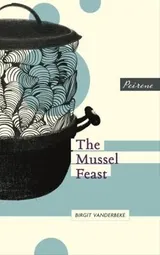
A mother and two children wait for the father to come home to a celebratory dinner of mussels, and as the evening lengthens the family’s whole regime of fear comes out, in one long unbroken monologue. Written in 1990 as the Wall fell, it is also a book about East Germany. Ideal for readers who want a novella that does one thing perfectly; Peirene publishes it in a small, handsome format.
A man and the woman he loved before the war meet again after nine years apart, and Zweig gives them a train journey and an evening to find out whether anything survives. Found among his papers and published long after his death, it is Zweig at his most concentrated. Ideal for readers who have not tried him and want to in an hour; Anthea Bell translated it and Pushkin Press, which revived Zweig in English, prints it beautifully.
A Swiss boarding school in the 1950s, a narrator obsessed with the new girl, and a hundred pages of prose so cold and composed that the heat underneath becomes unbearable. Jaeggy is a writer’s writer and this is her most read book. Ideal for readers who liked Ginzburg and want something stranger; Tim Parks’s translation is the standard one.
Translated by Alan Sheridan, CB editions, 2014; also in the Grove trilogy volume
Twin boys are left with a brutal grandmother in a village near the border during a war that is never named, and they write down what they see in sentences with no feeling in them, which is the most frightening thing in the book. Kristóf wrote it in French, her third language, and the plainness is deliberate. Ideal for readers who want the hardest book here, and who will go on to the two sequels.
Any of these fits a coat pocket and an evening. Fosse and Zweig are the gentlest doors; Ginzburg, Jaeggy and Kristóf are the sharp ones; Ernaux and Vanderbeke sit between. Buy them from the presses or an independent shop where you can, since these publishers depend on it, and the buttons here will take you there as well as to the big retailers.
Not every classic is a 900-page doorstop. These eight run from 60 to 190 pages, each can be finished in a weekend, and several are better than the long books that made their authors famous.
Some histories are read for information; these seven are read the way novels are, for character, pace and the dread of knowing how it ends. From the first month of 1914 to a Soviet kitchen table after the collapse, each is long, sourced to the footnote, and named in the edition whose binding will last.
Japanese fiction in English is now a crowded shelf, and the famous names are not always the right place to begin. These eight novels, most under 250 pages, are the way in: cafés and libraries, a convenience store, a mathematician with an eighty-minute memory, and finally a snow-country inn.