The American prize has a better hit rate than its reputation, and these six are where it has been right
By Jenny Eich23 November 20263 min read6 books
This site earns from qualifying purchases as an Amazon Associate and Bookshop.org affiliate, at no extra cost to you. Every book here was chosen by hand.How this works
The Pulitzer Prize for fiction has a rule the Booker and the Nobel do not: the book has to be by an American, and it is supposed to be about American life. That sounds like a limitation. In practice it has given the prize a steadier eye than most. The committee is not trying to pick the most important novel in the world. It is trying to pick the best American book of the year, and it has often got it right.
The winners also tend to be readable. Short books do well, story collections win, and the list has fewer of the bricks that make the Booker shelf so intimidating. The six here are from 2000 onwards, chosen as the ones a reader can pick up with no context and finish with something.
They go roughly from the most immediate to the most unusual. Start with McCarthy if you want to be gripped, with Robinson if you want to be calmed, and save Egan for when you are ready for a novel that rearranges itself in your hands.
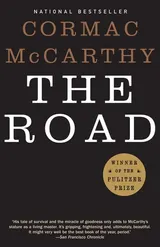
A man and his son walk south through a burnt America, pushing a shopping cart, and nothing else happens for 280 pages except everything. McCarthy stripped his prose to the bone for this one, no names, almost no commas, and the result is the most tender book he wrote and the most frightening. Most readers finish it in a day. Ideal for readers who think they do not like literary fiction, and for any parent who can bear it.
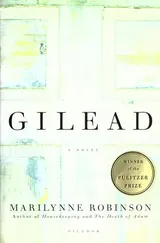
An old Iowa minister, dying, writes a letter to the seven-year-old son he will not see grow up, about his father, his grandfather who rode with John Brown, and the town he never left. Robinson’s sentences are plain and lit from inside, and the book moves at the pace of a long summer evening. It is the quietest Pulitzer winner and the one that readers come back to most. Ideal for readers who want a novel about goodness that is not sentimental; read slowly.
Also considerHome and Lila (Virago), which retell the same summer from other houses in the same town.
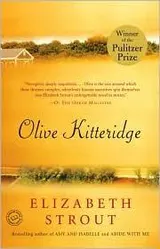
Thirteen linked stories set in a small Maine town, and in most of them Olive, a retired maths teacher with no patience for fools, is a bit-part who walks in, says something unforgivable and walks out. Then the book turns and she is the centre of it. Strout writes ordinary unhappiness better than almost anyone alive, and Olive is a creation on the scale of a Dickens character. Ideal for readers who like their novels in pieces, and for anyone who has had a difficult mother.
Also considerOlive, Again (Penguin), the sequel, which is nearly as good and sadder.
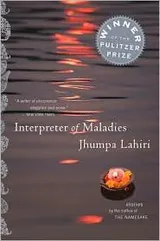
Nine stories, mostly about Bengali families in New England, and a debut that won the prize at thirty-two. Lahiri’s stories are built like short novels, with a whole marriage in twenty pages, and the title story, about a tour guide in India and an American couple who are not quite a couple, is as good as the form gets. Ideal for readers who want to try short stories and do not know where to begin, and for anyone who has lived between two countries.
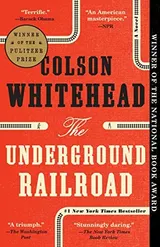
Cora runs from a Georgia plantation on an underground railroad that Whitehead makes literal, with tunnels, engines and stationmasters, and each state she reaches is a different American nightmare: eugenics in South Carolina, burning in North Carolina. The device sounds like a trick and turns out to be the truest thing in the book. It won the Pulitzer and the National Book Award, which almost never happens. Ideal for readers who want history as a novel of pursuit, and who can take it.
Thirteen chapters, each in a different voice and form, including one written as a PowerPoint deck, circling a record producer, his assistant and the people around them from the 1970s punk scene to a near future. The goon squad is time. It is funny, formally wild and then, when the pieces connect, unexpectedly moving. Ideal for readers who want a prize novel that feels like a mixtape, and for anyone who was in a band once.
Six books, four of them under 300 pages, two of them story collections. That is the thing about the Pulitzer: it has never been afraid of short. If you want the long ones, The Goldfinch and The Overstory are both winners and both worth the weeks. If you want a seventh short one, Less is the funniest book on the list.
Questions readers ask
Is the Pulitzer only for American authors?
Yes. The fiction prize goes to a book by an American author, preferably about American life. That is why none of the Booker or Nobel names appear here, and why the list reads as a portrait of the country.
Which Pulitzer winner is the easiest way in?
The Road. It is short, there is nothing to decode, and it is impossible to put down. Gilead is the one to read second, because it is the opposite of The Road in every way except quality.
Why are there story collections on a novel list?
The prize is for fiction, not novels, and story collections win it roughly once a decade. Interpreter of Maladies and Olive Kitteridge are two of the three best books here.
American classic lists recycle the same three school titles. These eight, from Dreiser’s Chicago to Steinbeck’s Dust Bowl, are the big, readable novels and the sharp short stories that the syllabus skipped, all in good modern paperbacks.
Some histories are read for information; these seven are read the way novels are, for character, pace and the dread of knowing how it ends. From the first month of 1914 to a Soviet kitchen table after the collapse, each is long, sourced to the footnote, and named in the edition whose binding will last.
Prize lists are a snapshot of a year’s taste. Decades on, some winners look like accidents and a few look like classics. These three are the ones still worth pressing on a friend.