Classic Literature
Which translation of Les Misérables should you read?
Donougher, Rose, Denny and the revised Wilbour, compared on the barricade and the sewers, with a note on the abridgements to avoid
By Jenny Eich23 November 20262 min read4 books
This site earns from qualifying purchases as an Amazon Associate and Bookshop.org affiliate, at no extra cost to you. Every book here was chosen by hand.How this works
Les Misérables is one of the longest novels most people will ever consider reading, and in English the length comes with a second decision: four translations are in print, and they do not agree on what the book should sound like or even on how much of it to include. Hugo stops the story for fifty pages on Waterloo, thirty on the Paris sewers and forty on convent life, and translators have cut, moved or kept those digressions according to taste.
The comparison here rests on two passages: Gavroche on the barricade, where the French is quick and slangy, and Jean Valjean carrying Marius through the sewers, where it is slow and grand. The modern complete translations handle both; the older ones handle one.
This guide covers the English question. For the French editions, see the note at the end.
Four translations, and what each does with Hugo’s digressions| Translator | Edition | Complete? | Best for |
|---|
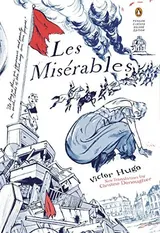
| Christine Donougher | Penguin Classics, 2013 | Yes, with full notes | The one to own: complete, readable, annotated |
|---|
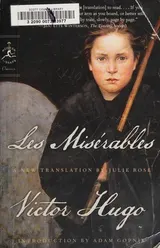
| Julie Rose | Modern Library, 2008 | Yes | Readers who want Hugo loud and modern |
|---|
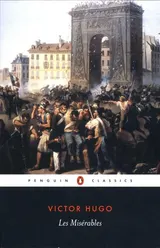
| Norman Denny | Penguin Classics, 1976 | Mostly; two digressions moved to appendices | A faster first reading |
|---|
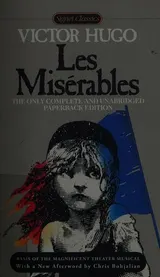
| Charles Wilbour, revised Fahnestock and MacAfee | Signet Classics, 1987 | Yes | The cheapest complete text |
|---|
Each row links to its entry below.
The books
Donougher’s is the first English translation in decades to be both complete and comfortable to read, in a plain, dignified English that lets Hugo be grand without sounding dated, and the Penguin edition’s notes explain the Paris, the politics and the argot. It replaced Denny as Penguin’s standard text for a reason. Ideal for anyone who wants the whole novel once, properly.
Rose set out to make Hugo sound as fierce and talkative in English as in French, and her version is faster, slangier and more American than Donougher’s, with some choices that purists dislike and many readers love. The Modern Library hardcover is a handsome single volume. Ideal for readers who found the novel stiff before and want it to raise its voice.
Denny’s 1976 Penguin was the standard for a generation and is still in print; it reads easily, but he moved two of Hugo’s long digressions, on convents and on argot, to appendices at the back and trimmed elsewhere. If you have an old Penguin on the shelf, this is it. Ideal for a first fast reading, provided you know what has been moved.
04.04. Les Misérables, Charles E. Wilbour translation, Signet Classics
Victor Hugo (1862)
Translated by Charles E. Wilbour, 1862, revised by Lee Fahnestock and Norman MacAfee, Signet Classics, 1987
Wilbour translated the novel in 1862, the year it appeared, and his text revised by Fahnestock and MacAfee in 1987 is complete, faithful and still slightly Victorian in cadence. The Signet mass-market paperback is the cheapest complete Les Misérables in print, at the cost of small type and a spine that will not survive a second reading. Ideal for readers on a budget who want all of it.
Buy Donougher, and give yourself a month. Rose if you want Hugo with the volume turned up. Avoid anything under 700 pages that calls itself Les Misérables without a translator’s name on the cover: it is an abridgement, usually of the Victorian text, and the digressions it cuts are where Hugo lives.